
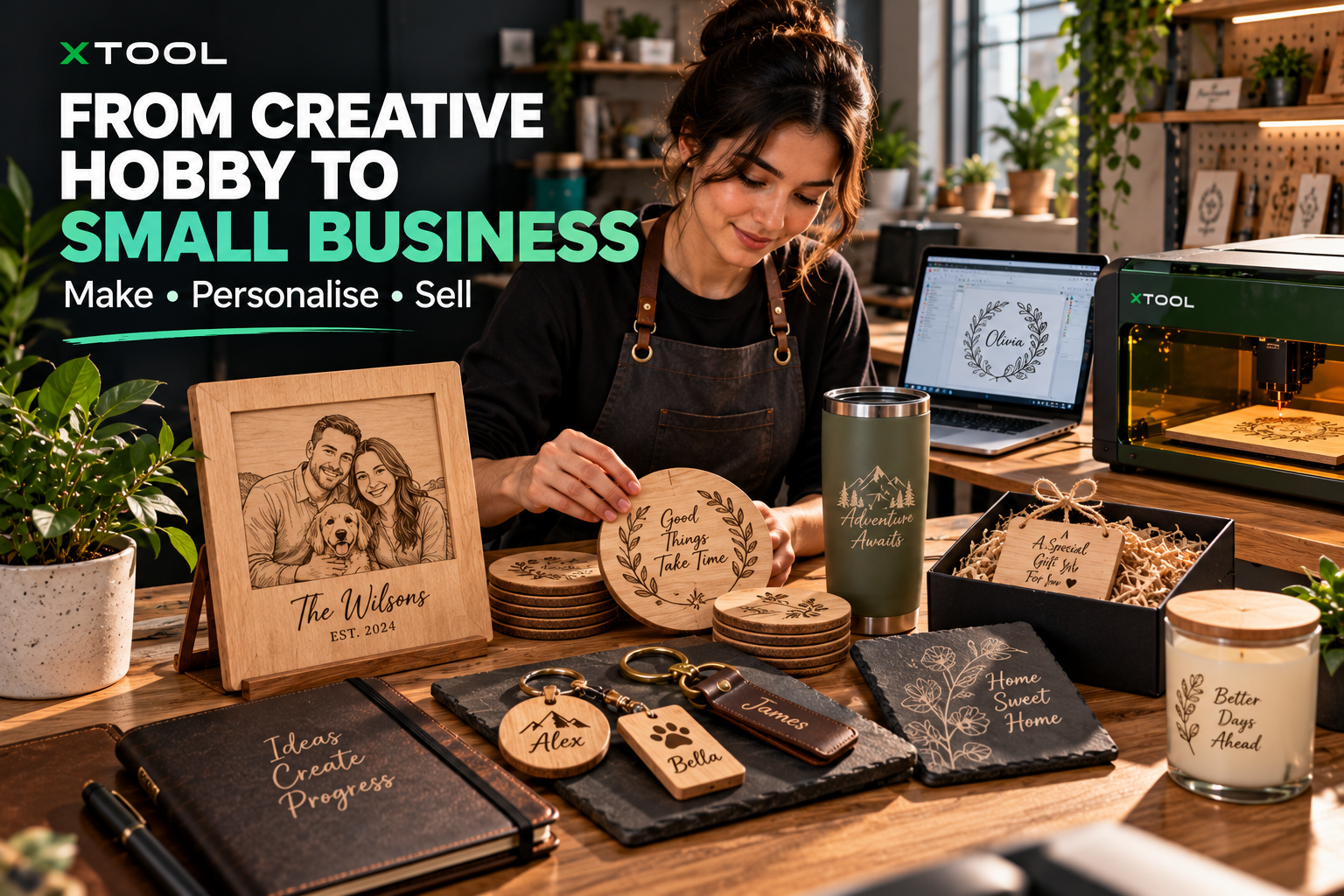
Turning a creative hobby into a small business can be a rewarding way to earn money while doing something you enjoy. Personalised gifts, engraved accessories, home décor, and branded merchandise allow creators to turn ideas into products customers value. With a practical plan and suitable equipment, Xtools can help you explore the tools needed to get started.
Personalised products appeal to customers because they offer something more individual than mass-produced items. From engraved keepsakes to custom signs, these products suit different occasions and interests. However, running a profitable business also requires understanding customer demand, production costs, and marketing.
Why Personalised Products Can Be a Good Business Idea
Customers often look for personalised gifts for birthdays, weddings, anniversaries, and other occasions. Businesses may also need branded merchandise, promotional products, and customised accessories. With suitable equipment from Xtools, you can explore different opportunities in these markets.
You could specialise in home décor, accessories, stationery, or gifts for a particular audience. Starting with a small product range helps you understand customer preferences and test demand before expanding.
Explore the Different Types of Products You Could Make
Personalised Gifts and Keepsakes
Engraved wooden plaques, keychains, name tags, and decorative gift boxes are examples of personalised products you could sell. Equipment from Xtools can help you explore designs featuring names, messages, and other personal details.
Focus on products that are easy to customise and reproduce consistently. Simple designs with thoughtful details can make attractive gifts.
Home Décor and Decorative Items
Wooden signs, ornaments, wall decorations, and custom nameplates offer opportunities in the home décor market. Customers may prefer different styles, so experiment with designs and finishes using suitable Xtools equipment.
Consider the product's size, appearance, and finish. Good-quality photographs showing decorative items in real settings can also make your online listings more appealing.
Jewellery, Accessories, and Small Everyday Items
Smaller products such as engraved tags, keychains, metal cards, and selected jewellery components can be useful for testing a business idea. Material compatibility depends on the machine, so check the specifications of Xtools equipment before purchasing supplies.
You can also develop themed collections for pet owners, travellers, or hobby enthusiasts. Start with a few designs and identify which products are practical to manufacture repeatedly.
Branded Merchandise for Businesses
Local cafés, retailers, event organisers, and small companies may need branded gifts, promotional items, or customised displays. Equipment from Xtools may help you explore these opportunities.
Before accepting bulk orders, make sure you can maintain consistent quality and meet production quantities and delivery deadlines.
Choosing the Right Equipment for Your Ideas
Start by identifying the products you want to make. Laser engravers, laser cutters, craft machines, and printing systems serve different purposes. Compare the relevant options from Xtools based on your production requirements rather than choosing equipment simply because of its advertised features.
Understand the Difference Between Engraving, Cutting, and Printing
Laser engraving marks a material's surface to create text, patterns, or images. Laser cutting shapes suitable materials, while printing systems apply designs through different processes. Check the specifications of each Xtools model to understand its capabilities.
Make a list of the materials you intend to use, such as wood, paper, leather, acrylic, or metal. Always confirm compatibility and follow the manufacturer's safety instructions.
Consider Your Workspace and Production Needs
Your workspace needs enough room for equipment, materials, and packaging. Ventilation, power access, a stable surface, and suitable safety features are also important. Check the dimensions and operating requirements of Xtools machines before setting up.
Choose equipment according to your expected workload. A small hobby business has different requirements from one handling regular bulk orders, so consider your current needs and future plans.
Use Design Software to Turn Ideas Into Products
Good equipment is only one part of production. You also need designs that can be prepared accurately and reproduced consistently. Depending on your machine, this may involve vector graphics, image files, or text layouts. Exploring the software and creative resources associated with Xtools can help you understand the process.
Beginners should start with simple projects such as nameplates and geometric patterns before experimenting with detailed artwork. Also, remember that images, characters, and brand logos found online may be protected by intellectual property rights. Use original designs or obtain the necessary commercial permissions.
Test Your Products Before Selling Them
Create sample products before listing them for sale. Check the quality of engravings, cuts, dimensions, and finishes. Testing different materials and settings with Xtools equipment helps you establish a reliable production process.
Record successful settings, follow manufacturer instructions, and test whenever you change materials. You can also ask potential customers to review your samples and suggest improvements before investing in larger quantities.
Work Out Your Costs and Set a Sensible Price
Your selling price should cover more than raw materials. Include production time, packaging, finishing supplies, transaction fees, shipping contributions, and equipment costs. A simple costing sheet for products made using Xtools can help you understand your expenses.
Avoid underpricing simply because your business is new. Compare similar products, calculate your costs, and set a price that leaves room for profit. Review your pricing as expenses and customer demand change.
Find Your First Customers
Once you have reliable products, choose suitable sales channels. Online marketplaces, social media, e-commerce websites, local craft events, and direct business outreach are possible starting points. Begin with one or two channels that suit your products.
Good product photography is essential for online listings. Show the product's size, texture, and personalised details. Include clear descriptions covering materials, dimensions, customisation options, processing times, and care instructions. Products created with Xtools should be presented with accurate information so customers know what to expect.
Build a Brand Around Your Products
A recognisable brand helps customers remember your business. A consistent name, visual style, product photography, and communication style can establish a clear identity without requiring expensive branding.
Your branding should reflect your target audience. A business selling wedding gifts may need a different style from one creating hobby accessories. Good customer service also matters. Respond to questions, confirm personalisation details, and communicate delivery delays promptly.
Take Safety Seriously From the Beginning
Creative machines must be operated according to their safety instructions. Laser equipment can involve risks related to exposure, fire, heat, and fumes. Follow the guidance for your exact model, use protective features correctly, and install suitable ventilation where required. Review the safety documentation for Xtools equipment before use.
Never assume a material is safe to process because it is commonly used in crafts. Some plastics and treated materials can release hazardous fumes. Avoid unknown materials, follow maintenance instructions, and never bypass protective features.
Avoid Common Mistakes When Starting Out
One common mistake is purchasing expensive equipment before deciding what to sell. Research your customers, shortlist product ideas, and compare the equipment required before investing in Xtools machinery.
Another mistake is launching too many products at once. Start with a small collection you can produce reliably, then expand based on customer feedback and actual sales.
Finally, do not confuse social media engagement with business success. Track enquiries, conversions, repeat purchases, and production costs to understand whether your products are performing well.
A Practical Plan for Your First 90 Days
During the first month, research your target audience, select a few product ideas, compare equipment, and estimate production costs. Use Xtools product information to understand your equipment and workspace requirements.
During the second month, create and test samples. Learn the relevant software, follow safety instructions, and ask potential customers for feedback.
During the third month, prepare a small launch. Finalise prices, write product descriptions, establish delivery policies, and choose your first sales channel. Start with manageable orders and review the results before expanding.
This timeline is a starting framework, not a fixed deadline. Take enough time to develop a reliable production process before accepting regular orders.
Wrapping Up
Turning a creative hobby into a small business requires more than inspiration. You need products customers want, suitable equipment, sensible pricing, and a reliable way to reach buyers. Personalised gifts, home décor, accessories, and branded merchandise all offer opportunities depending on your skills and target audience.
Start with a specific goal, research your market, create samples, and calculate your costs before expanding. Follow equipment limitations and safety instructions, and improve your designs through customer feedback. Exploring Xtools can help you find suitable tools for turning creative ideas into products you can sell.